Guides
Daily operating checklist for a home cleaning business, explained
A home cleaning SOP checklist for the working day: five stages from vehicle load to closeout, each with a completion test the crew can apply alone.
What to take away
- Split the day into five stages and give each one a completion test. A stage without a test is a habit, not a procedure.
- The vehicle load is the stage that decides the day. Almost every mid-route delay traces back to something missing at seven in the morning.
- Put the arrival routine in writing. The first four minutes inside a home set what the customer will notice at the end.
- Closeout is the stage crews skip when running late, and it is the one that protects you in a dispute.
- One page, laminated, in the vehicle. A procedure that lives in a folder is not a procedure.
Chemical use, dilution, contact time and protective equipment come from each product's label and safety data sheet. This checklist assumes a written hazard program already exists; it does not substitute for one.
How to use it
Five stages. Each has a short list and a completion test. The crew reads the test, not the list, once the routine is learned.
Print it on one page. Keep it in the vehicle. The reasoning behind the sequence is in the operations and workflow guide, and the skills each step assumes come from the training behind each step.
Stage one: vehicle load and start of day
Completion test: could this vehicle complete every job on today's route without stopping anywhere else?
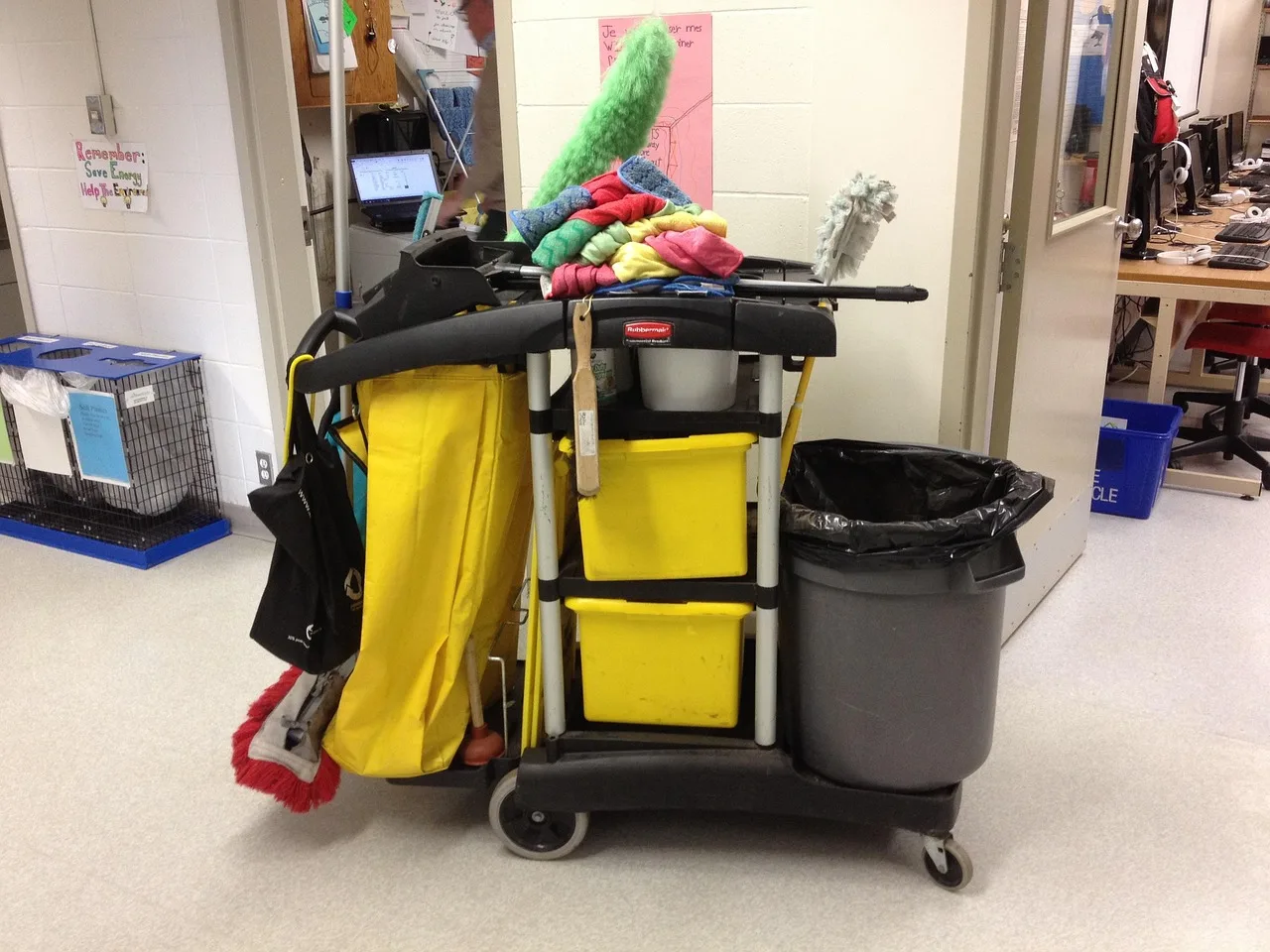
Vehicle load and start of day
- Job sheets for the day, with scope, allowance, access method and property notes.
- Clean cloths and pads in sealed containers, counted against today's room total plus a spare set.
- Soiled textile containers empty and separate from clean ones.
- Chemicals present, labels legible, secured against tipping, nothing on board that is not on the approved product list.
- Safety data sheets accessible in the form your program specifies.
- Protective equipment for today's work, in the right sizes.
- Vacuum working, filter checked, cord undamaged, spare belt on board.
- Mop frame, pads, buckets or the bucketless system, complete.
- Waste and recycling bags.
- Fuel adequate for the route.
- Phone charged, with the office number and the emergency contact card.
Label and product-list lines are not clerical. Employers with workers handling hazardous chemicals must keep a written program, intact container labels and warnings, available safety data sheets, and training on hazards, as set out in the Occupational Safety and Health Administration: Hazard Communication Standard.
A daily glance at the labels is how that stays true, rather than becoming a folder.
The full load specification, including quantities, sits with the equipment load.
Leaving is always a permitted answer. If a home is unsafe, the crew goes, without needing approval and without a conversation on the doorstep. Say so in advance so nobody has to decide alone.
Stage two: en route and arrival
Completion test: the customer knows you are there, and you know what you are walking into.
En route and arrival
- Confirm the arrival window against the schedule and notify the office if it has slipped.
- Park where you are permitted to park, and note any access restriction for next time.
- Read the job sheet before getting out, including the previous visit's notes.
- Ring or knock even where you hold a key, and announce yourself.
- Handle the alarm exactly as the sheet specifies. Never improvise a code.
- Greet any occupant, confirm anything unusual, and ask about areas to skip today.
- Walk the space briefly and note anything already damaged, dirty beyond the scope, or blocked.
- Photograph pre-existing damage if your policy provides for it, with consent recorded.
That walk takes two minutes and settles most later disputes. It is also where you find out that the home is materially different from what was quoted, which is a stop-and-call situation rather than a work-faster situation.
Stage three: setup inside the home
Completion test: the color system is in place and nothing is on a surface that could be damaged.
Setup inside the home
- Place equipment on hard flooring or on protection, never on finished wood or stone.
- Set out cloths by color for the zones being worked.
- Open windows or ventilate as the product labels require.
- Put protective equipment on before opening any chemical, not after.
- Keep chemicals together and out of reach of children and pets at all times.
- Never combine products. If a surface is not responding, stop and ask rather than improvising chemistry.
The exposures this stage controls, chemical, ergonomic, biological and slip related, are described with their attached standards in the Occupational Safety and Health Administration: Cleaning Industry overview. The ventilation and protective equipment lines are the ones most often skipped when running late, which is exactly when they matter.
Stage four: the work
Completion test: every task on the sheet is either done or logged as an exception with a reason.
The work
- Work the scope in the order the sheet specifies, so nothing depends on remembering.
- One cloth color per zone, into the soiled bag after use, never rinsed and reused across zones.
- A fresh mop pad per room where the system requires it.
- Check the duration allowance at the halfway point and notify the office early if the job will run over. Early is useful; late is an apology.
- Log anything outside the scope that the customer asks for rather than saying yes or no on the spot.
- Report any breakage immediately, photograph it, and do not negotiate on the doorstep.
- Stop and call for anything unsafepests, biohazards, an aggressive animal, a structural hazard, or an occupant making the crew uncomfortable. Leaving is always a permitted answer.
Stage five: closeout and end of day
Completion test: someone reading the record tomorrow could reconstruct the visit without asking you.
Per job:
- Final walk of every room worked, from the doorway, at the customer's eye level.
- Everything returned to where it was found.
- Lights, windows, alarm and lock handled as the sheet specifies.
- Arrival and departure times recorded on site rather than reconstructed later.
- Tasks completed and exceptions logged, with reasons.
- Notes for the next visit, especially anything that took longer than expected.
End of day, in this order, because each step depends on the one before it:
Closeout and end of day
- Waste disposed of properly, before anything clean is handled.
- Soiled textiles into the laundry cycle, not left in the vehicle overnight.
- Vacuum filter and brush roll checked, and any fault reported the same day rather than discovered tomorrow morning.
- Chemicals checked against the reorder points, with any low item flagged now.
- Clean textiles restocked to tomorrow's requirement, once the laundry position is known.
- Job records submitted, because they are the basis of both the invoice and the books.
The records habit pays for itself twice.
The Internal Revenue Service: What kind of records should I keep? guidance sets the general recordkeeping expectation: one event should produce both the operational record and the accounting one, not two systems that disagree.
Weekly, on a fixed day
- Deep clean of the vehicle interior and the textile containers.
- Full equipment check against the maintenance schedule.
- Label auditevery container, including decanted ones.
- Consumables counted against reorder points.
- Job records reviewed for missing times or exceptions.
- Fifteen minutes with the crew on what slowed them down this week.
That last item finds more real problems than any inspection. Crews know exactly where the day leaks and are rarely asked.
When the day goes wrong
The recovery rules belong to the schedule rather than to the crew, and they should be written before they are needed. Which job is dropped, who calls the customer, and how the remaining route is resequenced are decisions with a standard answer, set out in the day's scheduling rules.
If the same stage fails repeatedly, fix the stage rather than the person, and check that the operating assumptions you wrote into the operating assumptions in the plan still match how the work is actually done.
Common questions
Should crews sign off each stage?
Sign off the day, not every stage. Per-stage signatures become theater within a fortnight. What is worth capturing every time is arrival, departure, exceptions and notes for next visit.
How long should this checklist take?
The load and the closeout are the substantial ones, and both shrink with practice. If either takes long enough to threaten the route, the problem is usually a vehicle that is not organized rather than a crew that is slow.
What if a cleaner works alone?
The same list applies and the safety lines matter more. Add a check-in and check-out message to the office for each job, so that somebody knows where they are.
How do we keep this from becoming a form nobody reads?
Keep it to one page, use the completion tests rather than the full lists once learned, and change it whenever a crew shows you a step that does not match reality. A procedure that is never edited is a procedure nobody is using.