Guides
Starting a home cleaning business: five branches, a go or no go test, and the first ten customers
How to start a home cleaning business as a branching decision: five branches that fix the shape, a go or no go test, and the path to the first ten paying homes.
What to take away
- Treat the opening as a decision tree rather than a checklist. Five branches decide what the company becomes, and each one closes off options downstream.
- Do not accept money from a customer until four things exista written scope, insurance, a way to record the job, and a price built from your own cost per hour.
- The first ten customers come from people who already know you and from one narrow geographic push. Broad advertising in month one buys attention you cannot serve.
- Set a go or no go test before you start, with a date and a number attached, so that quitting or continuing is a decision rather than a drift.
Requirements for registration, insurance and worker classification depend on where you operate and whether you have employees. Confirm each with the relevant state or local office, and take chemical handling from the product label and safety data sheet rather than from any article.
What 2027 adds. Demand comes from two-parent working households and from older homeowners who pay for help. Neither group is growing fast, so price is where the pressure sits.
Many states index their minimum wage and raise it on January 1, which lifts the floor for entry level cleaning pay. A price set in 2026 has to absorb that January step without a re-quote. Check your own state's schedule.
Branch one: are you buying yourself a job or building a company?
Answer this before anything else, because it changes every subsequent branch.
If the goal is to clean homes yourself for a living, the sensible build is small, tight and solo. You need a scope, insurance, a route you can walk through in one day, and enough recurring clients to fill it. Hiring is optional and often counterproductive.
If the goal is a company that runs without you in it, you are building a training system and a schedule from the first week. You will also price differently, because the price has to carry a supervisor and a replacement cleaner who are not you.
Owners who never answer this question end up with the costs of the second and the revenue of the first.
Branch two: which work will you take?
Recurring maintenance cleaning is predictable and lower margin per hour. Deep cleans and move out work pay more per visit, arrive irregularly, and demand more equipment and more skill.
Recurring vs Deep Cleans
Recurring maintenance
- Predictability
- High
- Margin per hour
- Lower
- Equipment
- Basic
- Skill
- Standard
- Pricing basis
- Per hour
Deep and move out
- Predictability
- Low
- Margin per hour
- Higher
- Equipment
- More
- Skill
- More
- Pricing basis
- Per job
A company can start with either. What it cannot do is quote both from the same duration assumption. A move out clean is not a longer maintenance visit, it is a different job with different failure modes, and pricing it from the same per-hour logic is how a new owner loses a whole day for nothing.
Write one scope document per service type. That document is what makes the rest of the branches answerable, and the operational detail behind it belongs in the workflow you will run.
Branch three: employees or contractors?
This is not a preference and it is not settled by what the person prefers to be called. Worker classification is a legal test applied by federal and state agencies, and the consequences of getting it wrong fall on the business, not on the worker.
Employee or Contractor?
Who sets schedule, uniform, supplies?
You -> employee, price accordingly
Genuinely different -> attorney confirmation
For a new owner, the safest position is to assume that workers on your schedule, in your uniform, with your supplies, under your instructions are employees. Price accordingly.
If you believe your arrangement is genuinely different, get it confirmed by an employment attorney in your state before the first payroll, not after an audit. The consequences of a wrong answer sit alongside the other licensing questions for your state.
Branch four: what do you buy, and when?
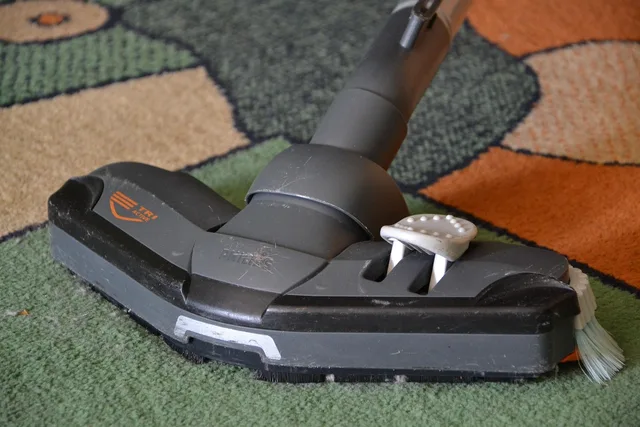
Buy for one complete visit, not for a company you do not yet have. One vacuum you would be happy to use every day, one full caddy, a color-coded cloth system with enough sets that laundry is not the constraint, and a means of carrying it all safely.
The chemical decision matters most and is treated most casually. Read the label and the safety data sheet for everything you carry, never combine products outside the manufacturer's instructions, and build the handling and training program from the start.
The Occupational Safety and Health Administration: Cleaning Industry overview sets out the exposures this trade actually carries, from chemicals to repetitive strain, and links to the standards that apply to employers. The rest of the equipment decisions follow from the scope, so write the scope first.
Branch five: what do you charge?
Build the fully burdened cost of one productive hour on site, add the unpaid time around it, then set a price that clears it with room. Do not open the price from a competitor's website. Their scope is not your scope, their crew size is not yours, and you cannot see their margin.
Build Your Hourly Price
- Fully burdened cost per productive hour
- Add unpaid time around the job
- Set price that clears cost with room
- Never open from a competitor's website
Worked example. One cleaner paid $18 an hour. Payroll taxes and workers' compensation add about 22 percent, so the burdened rate is near $22.
If 72 percent of paid time is cleaning and the rest is travel and admin, one productive hour costs about $31. Overhead for a solo operator, meaning insurance, supplies, phone, software and vehicle, typically runs $500 to $900 a month. Across 120 productive hours that is $4 to $8 an hour.
Fully burdened cost lands near $35 to $39 a productive hour. At a 50 percent gross margin the price is $70 to $78. At 40 percent it is $58 to $65. A three hour first clean quotes at $210 to $234, not at $150.
The four things that must exist before you take money
- A written scope for the service being sold, stating inclusions, exclusions and what triggers an additional charge.
- Insurance in force, with a certificate you can send. Some clients ask; the ones who do not ask still expect it.
- A record of the jobtime on site, who attended, what was done, and any exception. This is what settles a dispute six weeks later.
- Registration and tax basics in place. The Internal Revenue Service: Starting a business material sets out the federal steps, and the U.S. Small Business Administration: SBA Business Guide collects the wider federal groundwork including free counseling.
Startup cost ranges. Typical figures for a solo operator, and they move with state and city. General liability insurance with $1 million per occurrence runs about $400 to $1,200 a year. A $10,000 surety bond, where a client or city asks for one, runs about $100 to $350 a year.
An LLC filing runs $50 to $500. A city business license runs $50 to $400 a year. One complete kit with a commercial vacuum, caddy, cloths and chemicals runs $300 to $900. Workers' compensation applies once you hire. A realistic all in start lands between $1,000 and $3,000.
Getting to ten customers
The first ten come from two places, and neither of them is a broad advertising campaign.
- People who already trust you.Tell them plainly what you are doing, what a visit includes, and that you are taking a small number of recurring clients. Ask directly. This converts at a rate no advertising will match.
- One dense neighborhood.Choose the tightest area you can serve well and concentrate everything there. Route density is what makes the third job of the day profitable, and ten homes in one area is a viable business while ten homes across a county is a driving job.
Answer inquiries fast, quote from the scope document not a phone estimate, and convert every one-time clean into a schedule conversation before you leave the house.
Once the route is full, finding your first customers becomes a system, not a scramble.
When you first need a second pair of hands, training a first hire is a documented process, not improvisation.
The go or no go test
Set it now, in writing, with a date. Something like: by the end of month four, eight to twelve recurring visits a week booked, at a price that clears my cost per hour, in an area I can serve in one day.
Then honor it. The purpose of the test is not to be pessimistic. It is to make continuing a decision you made deliberately rather than one you slid into.
A common shape: month one for registration and insurance, month two for the first paid cleans, months three and four to fill the route.
Common questions
Do I need a license to clean houses?
It depends entirely on your state, county and city, and on whether you have employees. General business registration is common, occupational licensing for residential cleaning is not universal, and bonding is often a customer expectation rather than a legal one. Ask your state licensing office and your local clerk, and get the answer in writing.
Two concrete examples. California has no statewide license for residential cleaning. A city business license applies, and a seller's permit from the California Department of Tax and Fee Administration is free and is required if you sell taxable goods.
Texas has no statewide license either, and registration sits with the city. City registration typically runs $50 to $400 a year.
How soon should I hire?
When you are turning down recurring work you could otherwise serve, and you have cleaned enough homes yourself to write a scope and a duration allowance someone else can follow. Hiring before that means training someone into a process that does not exist.
Can I start part time?
Yes, and many do. The constraint is reliability: recurring clients buy a fixed slot, so a part-time schedule has to be a genuinely fixed one. Irregular availability is the fastest way to lose the recurring work that makes the business worth having.
What should I do first if I have no money at all?
Start with the smallest legitimate setup that includes insurance and take paid work you deliver yourself. Build the scope and the cost model from real jobs. That sequence is slower and it is the only one that produces a company rather than a debt.